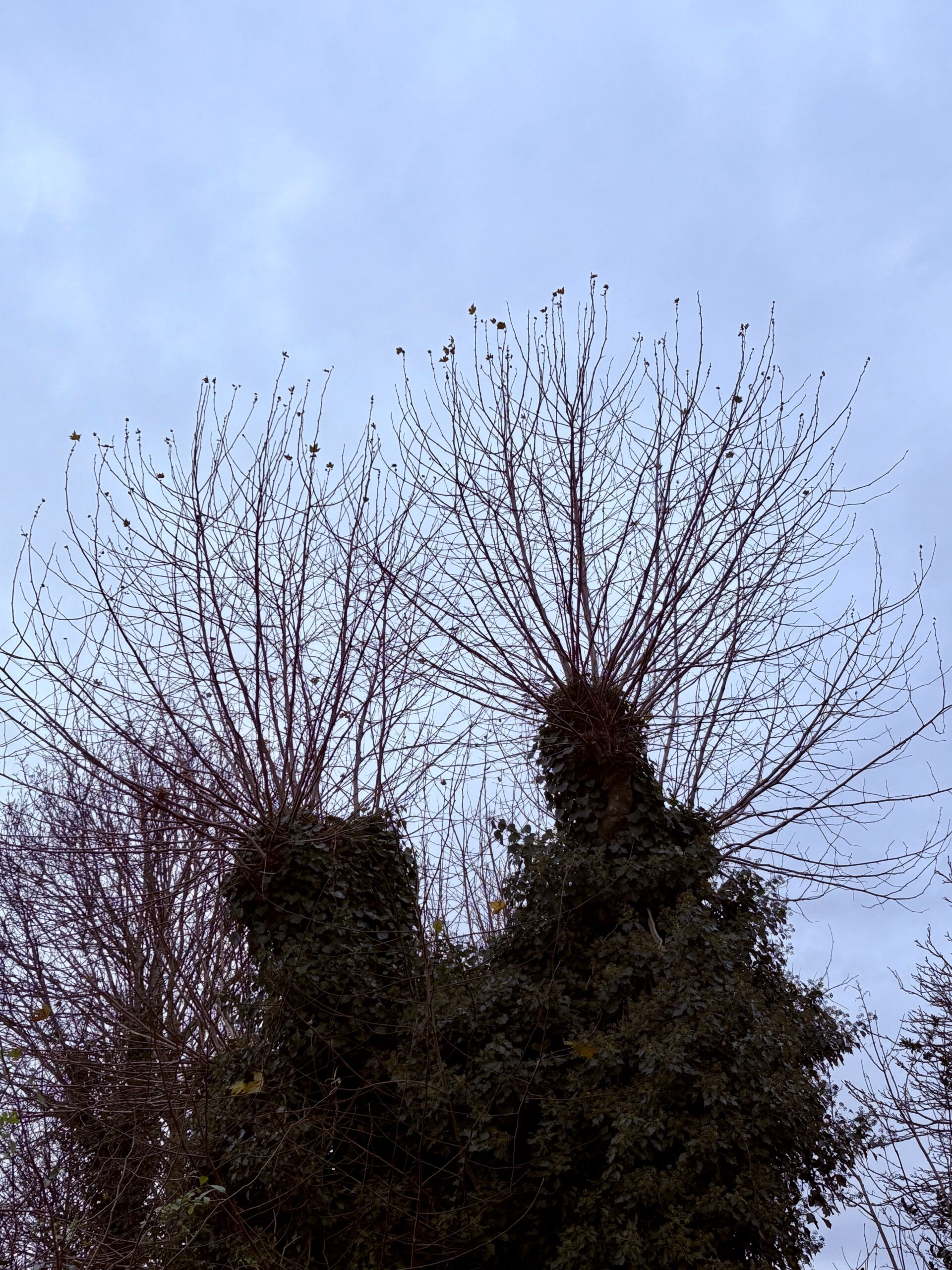
Coppicing is one of the ancient arts of woodland management. Here in Somerset a trackway has been discovered which was built using coppiced wood over 5,000 years ago. So we cannot claim that our plans for future coppicing are original!
When we plant our next batch of trees (weekend of Friday 31 January to Sunday 2 February 2025), on either side of the ride, we will be putting in a grove of 500-600 sweet chestnut trees, and an area of Hazel with Oak standards both with the mid-term aim of coppicing.
When researching these plans we were surprised to discover that, although sweet chestnut is one of the most common trees in the British landscape it does not qualify as a native tree. And most lovers of roast chestnuts agree that those grown in Europe outclass those in the UK.
Coppicing and pollarding result in similar regrowth
But… another crop from the sweet chestnut is the wood which at a young age (probably around 12-15 years) can be cut back and used for poles and fence posts. We hope this will also provide a modest income to help with the upkeep of the wood.
The aim with coppicing is the opposite of chopping down the tree. The upright shoots are cut back to a low level. But the tree soon grows back – pushing up increasing multiples of shoots. And because it multiplies and is fast-growing, the amount of carbon sequestration increases with each cycle. Truly a sustainable way of managing a woodland.