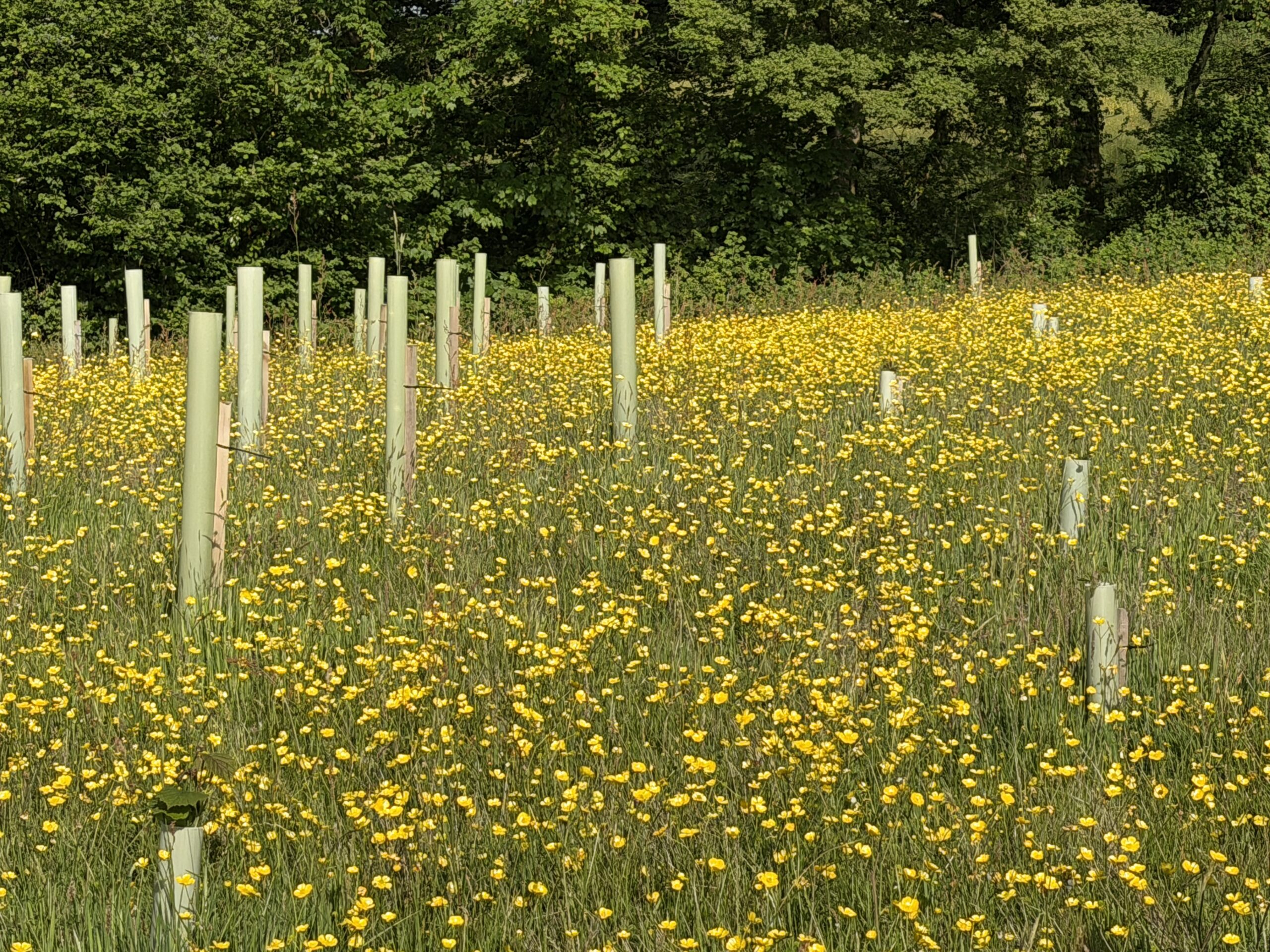
A three-day visit to the site in glorious (almost too hot and dry) Spring weather – and developments are (mainly) encouraging.
The site is now full of Spring colour. Bluebells were abundant beneath the trees in the ancient woodland, while the main surface area of the field is a stunning carpet of buttercups, dotted with many other wild flowers including purple clover, bugle, speedwell and cuckoo flower – pushing through where once sheep would have eaten them back.
Tree establishment continues to exceed expectations – they are now between 15 and 30 months old, with remarkably high survival rates. We’ve recorded just a handful of losses.
This year maintenance work is increasingly focused on targeted weeding where vigorous growth is beginning to compete with young trees, particularly where, in many cases, we were surprised to see grasses pushing up above the tops of tree guards. Deer browsing is also turning into a bit of a challenge. There is evidence of damage on probably hundreds of those trees which are protected only by shorter guards. Though they may well recover, deer pressure will need to be monitored closely whilst the trees are still vulnerable to their chomping, and then just when we will come “out of the woods” the next threat will be ring-barking by squirrels. This can devastate a young woodland.
Grassland management also featured during the visit. Following recent mowing, several hours were spent raking and clearing cuttings by hand – a bit old school but it saves the costs of mechanised equipment. A further cut ahead of our Summer campout is being considered.
During this visit, discussions with local nature recovery expert, Nick Benge, covered some interesting ideas for the future. In particular, he recommended introducing yellow rattle, a native hemi-parasitic plant that helps suppress vigorous grass growth and can create space for a wider range of wildflowers to flourish. We’ll be researching this further, but it looks as if it could offer long-term benefits for biodiversity while reducing mowing requirements.
We also discussed beekeeping with Nick. A local beekeeper wants to put some hives on our field, but we have learned that honey bees might compete with wild pollinators for the resources offered by our field and its surrounding area. We’re keen to host bees and have said yes, and think a bit of further research will help determine the most appropriate scale for any beekeeping activity.
Work also continued in clearing paths through the wooded area, making minor repairs and general maintenance – all to help keep the site accessible and thriving.
Planning is now underway for the August campout (weekend of 1 August), which promises to be another opportunity for friends of Wood Could Should to see the project’s progress firsthand (and of course to help with maintenance for those who are keen!).